Platform
Solutions
Resources
Company
Platform
Solutions
Resources
Company

Nick Morgan
∙
Preventing Insider Threats in Enterprise Password Managers

Nick Morgan
∙
Preventing Insider Threats in Enterprise Password Managers
Nick Morgan
∙
Preventing Insider Threats in Enterprise Password Managers
Traditional password managers create an insider threat vulnerability that most organizations overlook: system administrators can potentially access encrypted password vaults and the keys to decrypt them. Zero-knowledge password managers eliminate this risk by encrypting passwords exclusively on user devices with keys that never reach company servers. Even administrators with full system access cannot view, decrypt, or access user passwords.
According to the Ponemon Institute’s Cost of Insider Risks Report, organizations spend an average of $16.2 million annually to resolve insider threats, with 55% of incidents caused by negligent employees, 25% by malicious insiders, and 20% by credential theft. When the system protecting your credentials becomes vulnerable to internal access, your entire security foundation is at risk.
What Is an Insider Threat in Password Management?
An insider threat in password management occurs when employees with privileged system access can view, decrypt, or exfiltrate user passwords stored in the password manager database. These threats fall into three categories: malicious insiders who deliberately abuse access, negligent insiders who accidentally expose passwords, and compromised insiders whose stolen credentials give attackers internal access.
Password managers represent high-value targets because they contain credentials for every system across the organization. A single compromised password manager gives insiders access to financial systems, customer databases, and administrative controls.
Insider Threat Type | Password Manager Risk | Detection Difficulty |
|---|---|---|
Malicious Insider | Complete credential exposure across all systems | High - legitimate access patterns |
Negligent Insider | Partial exposure through logs, backups, or misconfigurations | Medium - discovered through audits |
Compromised Insider | Full access using legitimate authentication | Very High - appears as normal activity |
The challenge with traditional password managers is that legitimate administrator access for maintenance and support creates the same technical capabilities that insider threats exploit.
Can Password Manager Administrators See Your Passwords?
In traditional password managers like Keeper Security, 1Password, and LastPass, administrators cannot directly see passwords in plaintext. However, they may access encryption keys, server-side master password hashes, or vault data that could enable decryption.
Master password-based systems derive encryption keys from user passwords. This derivation happens on servers during authentication, meaning servers process master passwords even if marketing claims they are not stored. Administrators with server access can modify authentication code to capture master passwords, access encrypted vaults for offline attacks, or find password fragments in system logs.
The 2022 LastPass breach demonstrated these vulnerabilities. Attackers accessed customer password vaults stored on LastPass servers. While encrypted using master password-derived keys, the server-side storage enabled mass exfiltration. Users with weak master passwords faced brute-force attacks against their downloaded vaults.
Backup and recovery processes create additional insider access points. Encrypted vault backups must remain recoverable, requiring either backing up encryption keys alongside data or implementing key escrow where administrators access recovery keys.
How Master Passwords Create Insider Threat Vulnerabilities
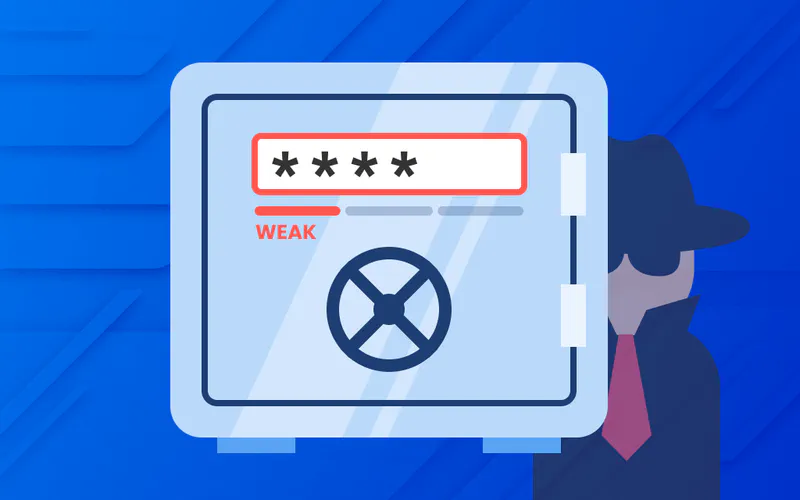
Master passwords create a single point of failure. Since encryption keys are derived from passwords, anyone who accesses password hashes or logs can potentially reconstruct encryption keys.
Human-chosen passwords suffer from inherent entropy limitations. Research shows user-chosen passwords rarely exceed 30 bits of entropy regardless of length or complexity. Encryption keys derived from low-entropy passwords can be attacked much faster than randomly generated keys.
Log files present persistent insider threat risks. During authentication failures or system errors, master password fragments may appear in logs. Administrators with log access can search for these fragments, potentially reconstructing full passwords over time.
Password changes create impossible key management scenarios. When users change master passwords, all encrypted data must be re-encrypted with new keys. This requires temporarily having both old and new keys available simultaneously. Many password managers avoid this by never truly rotating encryption keys, instead maintaining persistent keys “wrapped” by master password-derived keys. GDPR Article 25 requires data protection by design, yet systems that cannot rotate encryption keys violate these requirements.
Hardware security modules (HSMs) are proposed to secure master password-derived keys, but they do not eliminate insider threats. HSM administrators must manage hardware, configure access policies, and handle backup/recovery, giving them access to stored keys.
What Is Zero-Knowledge Architecture in Password Managers?
Zero-knowledge architecture ensures the password manager service has zero knowledge of user passwords, encryption keys, or vault contents. All encryption happens client-side, with keys stored exclusively on user devices. The service provider cannot access user data even with full administrator privileges.
True zero-knowledge separates identity management from access management. The authentication system verifies who the user is without gaining access to what they can decrypt. Compromising authentication servers does not compromise encrypted data because encryption keys never existed on those servers.
Client-side key generation creates encryption keys on user devices that never transmit to servers. When users encrypt passwords, encryption happens locally using device-stored keys. Servers receive only ciphertext they cannot decrypt.
Zero-knowledge systems provide mathematical proof the service provider cannot access user data. Without decryption keys, encrypted data remains unreadable regardless of administrator privileges or infrastructure compromise.
How PassHub Eliminates Insider Threats Without Master Passwords
PassHub eliminates insider threats by removing master passwords entirely and using cryptographic hardware keys for both authentication and encryption. When there is no master password, there is no master password to breach, capture in logs, or use to derive weak encryption keys.
The WWPass Key replaces master passwords with a cryptographic device available as a mobile app, smart card, or USB+NFC hardware token. Each WWPass Key generates a master encryption key during initialization that never leaves the device.
When users encrypt passwords, the WWPass Key generates a provider-specific encryption key derived from the master key without exposing it. This derived key encrypts individual passwords. The hierarchical structure ensures no single component holds all keys: cloud servers see only encrypted vaults, application servers hold encrypted password keys, and only the user’s WWPass Key contains the master key.
Non-human-readable credentials (NHRC) replace traditional authentication.
The WWPass Key generates cryptographic credentials that cannot be typed or remembered.
Even if insiders obtain NHRC data, it is useless because these credentials cannot be entered into any login form.
Separation of duties is enforced architecturally. System administrators manage infrastructure but have zero access to unencrypted passwords or encryption keys. The technical architecture makes insider access impossible rather than merely prohibited.
Feature | Keeper Security | 1Password | LastPass | PassHub |
|---|---|---|---|---|
Master Password Required | Yes | Yes | Yes | No |
Encryption Key Location | Derived from master password on server | Derived from master password | Derived from master password on server | Generated on user’s device only |
Administrator Vault Access | Possible through key derivation | Possible through recovery process | Proven vulnerable (2022 breach) | Cryptographically impossible |
Insider Threat Vector | Master password capture/logs | Master password compromise | Master password brute-force | None |
Zero-Knowledge Architecture | Claimed but master password processed | Claimed but recovery possible | No | True zero-knowledge by design |
Technical Implementation and Compliance Benefits
Client-side encryption begins when users create passwords. The password manager application encrypts passwords on the user’s device before network transmission using keys from the WWPass Key. Servers receive only ciphertext.
Distributed data storage fragments encryption key material across 12 certified storage nodes using Reed-Solomon error correction. Compromising a single node yields cryptographically useless fragments.
GDPR Article 32 requires appropriate security measures including encryption. Zero-knowledge password managers provide stronger compliance through true pseudonymization where the data controller cannot decrypt user data.
NIST Special Publication 800-57 establishes key management requirements emphasizing separation of keys from data. Zero-knowledge systems align with these requirements through physical separation and cryptographic hardware.
Compliance Requirement | Traditional Password Manager | Zero-Knowledge Password Manager |
|---|---|---|
GDPR Article 32 - Encryption | Server-side with accessible keys | Client-side with user-controlled keys |
NIST 800-57 - Key Management | Software storage with admin access | Hardware key generation and storage |
HIPAA Security Rule | Addressable encryption | Mandatory client-side encryption |
PCI DSS - Cardholder Data | Access controls on administrators | No administrator access possible |
Common Questions About Zero-Knowledge Password Managers
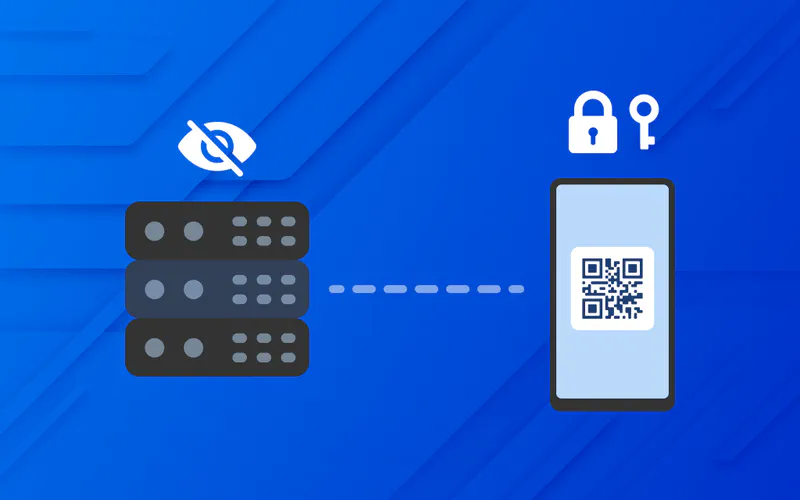
Organizations evaluating zero-knowledge password managers typically ask what happens when users lose devices. PassHub implements user-controlled key recovery using distributed storage with Reed-Solomon error correction. When users authenticate to restore a lost device, their master key is automatically restored without exposing keys to administrators.
Migration takes two to three months. Users receive WWPass Keys and bind them to existing accounts. The process integrates with existing identity systems through SAML or OAuth2 while migrating encrypted vault data.
Shared team vaults encrypt passwords separately for each authorized user with their individual keys. Each team member decrypts using their WWPass Key while administrators cannot access any copies.
User experience improves by eliminating master passwords entirely. Users authenticate with WWPass Key biometrics, PIN, or hardware token. No passwords to remember, no complexity requirements, and no rotation mandates.
When Zero-Knowledge Architecture Becomes Essential
Healthcare organizations handling patient credentials face both HIPAA requirements and trust concerns. Zero-knowledge architecture demonstrates that even database breaches cannot expose authentication credentials.
Financial services managing privileged account passwords for trading and payment systems need protection against insider threats. Insider threats in financial services cost an average of $21 million per incident. Zero-knowledge eliminates scenarios where administrators access financial system credentials.
Government contractors with classified information must implement zero-trust security. Password managers protecting classified system access cannot have administrative backdoors. Zero-knowledge provides cryptographic assurance for DFARS and CMMC requirements.
Managed service providers (MSPs) accessing hundreds of customer environments must prove to customers that MSP administrators cannot abuse privileged access. Zero-knowledge enables cryptographic proof that customer credentials remain inaccessible to MSP staff.
Evaluating Your Password Manager Security

Organizations should audit their current password manager against a fundamental question: if a privileged insider decided to exfiltrate credentials today, could they technically access encrypted password vaults? With master password-based systems like Keeper Security, 1Password, and LastPass, insiders with sufficient privileges could potentially access master password hashes, encryption keys, or vault backups.
Test your current system. Can database administrators query encrypted vault tables? Can system administrators access encryption key storage? Can backup systems restore vaults to environments where support staff have access? If yes, insider threat vectors exist regardless of access control policies.
Average breach detection time exceeds 277 days, meaning insider threats often operate undetected for months. Password managers assuming administrators remain trustworthy face unacceptable risk. Zero-knowledge architecture assumes insider compromise from day one, ensuring even undetected insider access cannot decrypt vaults.
Conclusion: Cryptographic Security Over Policy-Based Controls
The difference between traditional and zero-knowledge password managers is the difference between policy-based and cryptographic security. Master password systems rely on policies prohibiting administrator access and audit logs detecting insider threats. These policies assume administrators follow rules and violations can be detected before damage occurs.
Zero-knowledge password managers like PassHub make insider access cryptographically impossible.
No policy can override the mathematical reality that encrypted data cannot be decrypted without keys existing only on user devices. No administrator privileges grant access to keys that never existed on servers.
Organizations protecting sensitive credentials, operating in regulated industries, or serving security-conscious customers should implement zero-knowledge password management as baseline architecture that makes insider credential theft impossible. PassHub demonstrates that eliminating master passwords while providing zero-knowledge architecture is practically deployable at enterprise scale, creating password management security that withstands both external attacks and insider threats through architectural design rather than operational controls.
Traditional password managers create an insider threat vulnerability that most organizations overlook: system administrators can potentially access encrypted password vaults and the keys to decrypt them. Zero-knowledge password managers eliminate this risk by encrypting passwords exclusively on user devices with keys that never reach company servers. Even administrators with full system access cannot view, decrypt, or access user passwords.
According to the Ponemon Institute’s Cost of Insider Risks Report, organizations spend an average of $16.2 million annually to resolve insider threats, with 55% of incidents caused by negligent employees, 25% by malicious insiders, and 20% by credential theft. When the system protecting your credentials becomes vulnerable to internal access, your entire security foundation is at risk.
What Is an Insider Threat in Password Management?
An insider threat in password management occurs when employees with privileged system access can view, decrypt, or exfiltrate user passwords stored in the password manager database. These threats fall into three categories: malicious insiders who deliberately abuse access, negligent insiders who accidentally expose passwords, and compromised insiders whose stolen credentials give attackers internal access.
Password managers represent high-value targets because they contain credentials for every system across the organization. A single compromised password manager gives insiders access to financial systems, customer databases, and administrative controls.
Insider Threat Type | Password Manager Risk | Detection Difficulty |
|---|---|---|
Malicious Insider | Complete credential exposure across all systems | High - legitimate access patterns |
Negligent Insider | Partial exposure through logs, backups, or misconfigurations | Medium - discovered through audits |
Compromised Insider | Full access using legitimate authentication | Very High - appears as normal activity |
The challenge with traditional password managers is that legitimate administrator access for maintenance and support creates the same technical capabilities that insider threats exploit.
Can Password Manager Administrators See Your Passwords?
In traditional password managers like Keeper Security, 1Password, and LastPass, administrators cannot directly see passwords in plaintext. However, they may access encryption keys, server-side master password hashes, or vault data that could enable decryption.
Master password-based systems derive encryption keys from user passwords. This derivation happens on servers during authentication, meaning servers process master passwords even if marketing claims they are not stored. Administrators with server access can modify authentication code to capture master passwords, access encrypted vaults for offline attacks, or find password fragments in system logs.
The 2022 LastPass breach demonstrated these vulnerabilities. Attackers accessed customer password vaults stored on LastPass servers. While encrypted using master password-derived keys, the server-side storage enabled mass exfiltration. Users with weak master passwords faced brute-force attacks against their downloaded vaults.
Backup and recovery processes create additional insider access points. Encrypted vault backups must remain recoverable, requiring either backing up encryption keys alongside data or implementing key escrow where administrators access recovery keys.
How Master Passwords Create Insider Threat Vulnerabilities
Master passwords create a single point of failure. Since encryption keys are derived from passwords, anyone who accesses password hashes or logs can potentially reconstruct encryption keys.
Human-chosen passwords suffer from inherent entropy limitations. Research shows user-chosen passwords rarely exceed 30 bits of entropy regardless of length or complexity. Encryption keys derived from low-entropy passwords can be attacked much faster than randomly generated keys.
Log files present persistent insider threat risks. During authentication failures or system errors, master password fragments may appear in logs. Administrators with log access can search for these fragments, potentially reconstructing full passwords over time.
Password changes create impossible key management scenarios. When users change master passwords, all encrypted data must be re-encrypted with new keys. This requires temporarily having both old and new keys available simultaneously. Many password managers avoid this by never truly rotating encryption keys, instead maintaining persistent keys “wrapped” by master password-derived keys. GDPR Article 25 requires data protection by design, yet systems that cannot rotate encryption keys violate these requirements.
Hardware security modules (HSMs) are proposed to secure master password-derived keys, but they do not eliminate insider threats. HSM administrators must manage hardware, configure access policies, and handle backup/recovery, giving them access to stored keys.
What Is Zero-Knowledge Architecture in Password Managers?
Zero-knowledge architecture ensures the password manager service has zero knowledge of user passwords, encryption keys, or vault contents. All encryption happens client-side, with keys stored exclusively on user devices. The service provider cannot access user data even with full administrator privileges.
True zero-knowledge separates identity management from access management. The authentication system verifies who the user is without gaining access to what they can decrypt. Compromising authentication servers does not compromise encrypted data because encryption keys never existed on those servers.
Client-side key generation creates encryption keys on user devices that never transmit to servers. When users encrypt passwords, encryption happens locally using device-stored keys. Servers receive only ciphertext they cannot decrypt.
Zero-knowledge systems provide mathematical proof the service provider cannot access user data. Without decryption keys, encrypted data remains unreadable regardless of administrator privileges or infrastructure compromise.
How PassHub Eliminates Insider Threats Without Master Passwords
PassHub eliminates insider threats by removing master passwords entirely and using cryptographic hardware keys for both authentication and encryption. When there is no master password, there is no master password to breach, capture in logs, or use to derive weak encryption keys.
The WWPass Key replaces master passwords with a cryptographic device available as a mobile app, smart card, or USB+NFC hardware token. Each WWPass Key generates a master encryption key during initialization that never leaves the device.
When users encrypt passwords, the WWPass Key generates a provider-specific encryption key derived from the master key without exposing it. This derived key encrypts individual passwords. The hierarchical structure ensures no single component holds all keys: cloud servers see only encrypted vaults, application servers hold encrypted password keys, and only the user’s WWPass Key contains the master key.
Non-human-readable credentials (NHRC) replace traditional authentication.
The WWPass Key generates cryptographic credentials that cannot be typed or remembered.
Even if insiders obtain NHRC data, it is useless because these credentials cannot be entered into any login form.
Separation of duties is enforced architecturally. System administrators manage infrastructure but have zero access to unencrypted passwords or encryption keys. The technical architecture makes insider access impossible rather than merely prohibited.
Feature | Keeper Security | 1Password | LastPass | PassHub |
|---|---|---|---|---|
Master Password Required | Yes | Yes | Yes | No |
Encryption Key Location | Derived from master password on server | Derived from master password | Derived from master password on server | Generated on user’s device only |
Administrator Vault Access | Possible through key derivation | Possible through recovery process | Proven vulnerable (2022 breach) | Cryptographically impossible |
Insider Threat Vector | Master password capture/logs | Master password compromise | Master password brute-force | None |
Zero-Knowledge Architecture | Claimed but master password processed | Claimed but recovery possible | No | True zero-knowledge by design |
Technical Implementation and Compliance Benefits
Client-side encryption begins when users create passwords. The password manager application encrypts passwords on the user’s device before network transmission using keys from the WWPass Key. Servers receive only ciphertext.
Distributed data storage fragments encryption key material across 12 certified storage nodes using Reed-Solomon error correction. Compromising a single node yields cryptographically useless fragments.
GDPR Article 32 requires appropriate security measures including encryption. Zero-knowledge password managers provide stronger compliance through true pseudonymization where the data controller cannot decrypt user data.
NIST Special Publication 800-57 establishes key management requirements emphasizing separation of keys from data. Zero-knowledge systems align with these requirements through physical separation and cryptographic hardware.
Compliance Requirement | Traditional Password Manager | Zero-Knowledge Password Manager |
|---|---|---|
GDPR Article 32 - Encryption | Server-side with accessible keys | Client-side with user-controlled keys |
NIST 800-57 - Key Management | Software storage with admin access | Hardware key generation and storage |
HIPAA Security Rule | Addressable encryption | Mandatory client-side encryption |
PCI DSS - Cardholder Data | Access controls on administrators | No administrator access possible |
Common Questions About Zero-Knowledge Password Managers
Organizations evaluating zero-knowledge password managers typically ask what happens when users lose devices. PassHub implements user-controlled key recovery using distributed storage with Reed-Solomon error correction. When users authenticate to restore a lost device, their master key is automatically restored without exposing keys to administrators.
Migration takes two to three months. Users receive WWPass Keys and bind them to existing accounts. The process integrates with existing identity systems through SAML or OAuth2 while migrating encrypted vault data.
Shared team vaults encrypt passwords separately for each authorized user with their individual keys. Each team member decrypts using their WWPass Key while administrators cannot access any copies.
User experience improves by eliminating master passwords entirely. Users authenticate with WWPass Key biometrics, PIN, or hardware token. No passwords to remember, no complexity requirements, and no rotation mandates.
When Zero-Knowledge Architecture Becomes Essential
Healthcare organizations handling patient credentials face both HIPAA requirements and trust concerns. Zero-knowledge architecture demonstrates that even database breaches cannot expose authentication credentials.
Financial services managing privileged account passwords for trading and payment systems need protection against insider threats. Insider threats in financial services cost an average of $21 million per incident. Zero-knowledge eliminates scenarios where administrators access financial system credentials.
Government contractors with classified information must implement zero-trust security. Password managers protecting classified system access cannot have administrative backdoors. Zero-knowledge provides cryptographic assurance for DFARS and CMMC requirements.
Managed service providers (MSPs) accessing hundreds of customer environments must prove to customers that MSP administrators cannot abuse privileged access. Zero-knowledge enables cryptographic proof that customer credentials remain inaccessible to MSP staff.
Evaluating Your Password Manager Security
Organizations should audit their current password manager against a fundamental question: if a privileged insider decided to exfiltrate credentials today, could they technically access encrypted password vaults? With master password-based systems like Keeper Security, 1Password, and LastPass, insiders with sufficient privileges could potentially access master password hashes, encryption keys, or vault backups.
Test your current system. Can database administrators query encrypted vault tables? Can system administrators access encryption key storage? Can backup systems restore vaults to environments where support staff have access? If yes, insider threat vectors exist regardless of access control policies.
Average breach detection time exceeds 277 days, meaning insider threats often operate undetected for months. Password managers assuming administrators remain trustworthy face unacceptable risk. Zero-knowledge architecture assumes insider compromise from day one, ensuring even undetected insider access cannot decrypt vaults.
Conclusion: Cryptographic Security Over Policy-Based Controls
The difference between traditional and zero-knowledge password managers is the difference between policy-based and cryptographic security. Master password systems rely on policies prohibiting administrator access and audit logs detecting insider threats. These policies assume administrators follow rules and violations can be detected before damage occurs.
Zero-knowledge password managers like PassHub make insider access cryptographically impossible.
No policy can override the mathematical reality that encrypted data cannot be decrypted without keys existing only on user devices. No administrator privileges grant access to keys that never existed on servers.
Organizations protecting sensitive credentials, operating in regulated industries, or serving security-conscious customers should implement zero-knowledge password management as baseline architecture that makes insider credential theft impossible. PassHub demonstrates that eliminating master passwords while providing zero-knowledge architecture is practically deployable at enterprise scale, creating password management security that withstands both external attacks and insider threats through architectural design rather than operational controls.
Traditional password managers create an insider threat vulnerability that most organizations overlook: system administrators can potentially access encrypted password vaults and the keys to decrypt them. Zero-knowledge password managers eliminate this risk by encrypting passwords exclusively on user devices with keys that never reach company servers. Even administrators with full system access cannot view, decrypt, or access user passwords.
According to the Ponemon Institute’s Cost of Insider Risks Report, organizations spend an average of $16.2 million annually to resolve insider threats, with 55% of incidents caused by negligent employees, 25% by malicious insiders, and 20% by credential theft. When the system protecting your credentials becomes vulnerable to internal access, your entire security foundation is at risk.
What Is an Insider Threat in Password Management?
An insider threat in password management occurs when employees with privileged system access can view, decrypt, or exfiltrate user passwords stored in the password manager database. These threats fall into three categories: malicious insiders who deliberately abuse access, negligent insiders who accidentally expose passwords, and compromised insiders whose stolen credentials give attackers internal access.
Password managers represent high-value targets because they contain credentials for every system across the organization. A single compromised password manager gives insiders access to financial systems, customer databases, and administrative controls.
Insider Threat Type | Password Manager Risk | Detection Difficulty |
|---|---|---|
Malicious Insider | Complete credential exposure across all systems | High - legitimate access patterns |
Negligent Insider | Partial exposure through logs, backups, or misconfigurations | Medium - discovered through audits |
Compromised Insider | Full access using legitimate authentication | Very High - appears as normal activity |
The challenge with traditional password managers is that legitimate administrator access for maintenance and support creates the same technical capabilities that insider threats exploit.
Can Password Manager Administrators See Your Passwords?
In traditional password managers like Keeper Security, 1Password, and LastPass, administrators cannot directly see passwords in plaintext. However, they may access encryption keys, server-side master password hashes, or vault data that could enable decryption.
Master password-based systems derive encryption keys from user passwords. This derivation happens on servers during authentication, meaning servers process master passwords even if marketing claims they are not stored. Administrators with server access can modify authentication code to capture master passwords, access encrypted vaults for offline attacks, or find password fragments in system logs.
The 2022 LastPass breach demonstrated these vulnerabilities. Attackers accessed customer password vaults stored on LastPass servers. While encrypted using master password-derived keys, the server-side storage enabled mass exfiltration. Users with weak master passwords faced brute-force attacks against their downloaded vaults.
Backup and recovery processes create additional insider access points. Encrypted vault backups must remain recoverable, requiring either backing up encryption keys alongside data or implementing key escrow where administrators access recovery keys.
How Master Passwords Create Insider Threat Vulnerabilities
Master passwords create a single point of failure. Since encryption keys are derived from passwords, anyone who accesses password hashes or logs can potentially reconstruct encryption keys.
Human-chosen passwords suffer from inherent entropy limitations. Research shows user-chosen passwords rarely exceed 30 bits of entropy regardless of length or complexity. Encryption keys derived from low-entropy passwords can be attacked much faster than randomly generated keys.
Log files present persistent insider threat risks. During authentication failures or system errors, master password fragments may appear in logs. Administrators with log access can search for these fragments, potentially reconstructing full passwords over time.
Password changes create impossible key management scenarios. When users change master passwords, all encrypted data must be re-encrypted with new keys. This requires temporarily having both old and new keys available simultaneously. Many password managers avoid this by never truly rotating encryption keys, instead maintaining persistent keys “wrapped” by master password-derived keys. GDPR Article 25 requires data protection by design, yet systems that cannot rotate encryption keys violate these requirements.
Hardware security modules (HSMs) are proposed to secure master password-derived keys, but they do not eliminate insider threats. HSM administrators must manage hardware, configure access policies, and handle backup/recovery, giving them access to stored keys.
What Is Zero-Knowledge Architecture in Password Managers?
Zero-knowledge architecture ensures the password manager service has zero knowledge of user passwords, encryption keys, or vault contents. All encryption happens client-side, with keys stored exclusively on user devices. The service provider cannot access user data even with full administrator privileges.
True zero-knowledge separates identity management from access management. The authentication system verifies who the user is without gaining access to what they can decrypt. Compromising authentication servers does not compromise encrypted data because encryption keys never existed on those servers.
Client-side key generation creates encryption keys on user devices that never transmit to servers. When users encrypt passwords, encryption happens locally using device-stored keys. Servers receive only ciphertext they cannot decrypt.
Zero-knowledge systems provide mathematical proof the service provider cannot access user data. Without decryption keys, encrypted data remains unreadable regardless of administrator privileges or infrastructure compromise.
How PassHub Eliminates Insider Threats Without Master Passwords
PassHub eliminates insider threats by removing master passwords entirely and using cryptographic hardware keys for both authentication and encryption. When there is no master password, there is no master password to breach, capture in logs, or use to derive weak encryption keys.
The WWPass Key replaces master passwords with a cryptographic device available as a mobile app, smart card, or USB+NFC hardware token. Each WWPass Key generates a master encryption key during initialization that never leaves the device.
When users encrypt passwords, the WWPass Key generates a provider-specific encryption key derived from the master key without exposing it. This derived key encrypts individual passwords. The hierarchical structure ensures no single component holds all keys: cloud servers see only encrypted vaults, application servers hold encrypted password keys, and only the user’s WWPass Key contains the master key.
Non-human-readable credentials (NHRC) replace traditional authentication.
The WWPass Key generates cryptographic credentials that cannot be typed or remembered.
Even if insiders obtain NHRC data, it is useless because these credentials cannot be entered into any login form.
Separation of duties is enforced architecturally. System administrators manage infrastructure but have zero access to unencrypted passwords or encryption keys. The technical architecture makes insider access impossible rather than merely prohibited.
Feature | Keeper Security | 1Password | LastPass | PassHub |
|---|---|---|---|---|
Master Password Required | Yes | Yes | Yes | No |
Encryption Key Location | Derived from master password on server | Derived from master password | Derived from master password on server | Generated on user’s device only |
Administrator Vault Access | Possible through key derivation | Possible through recovery process | Proven vulnerable (2022 breach) | Cryptographically impossible |
Insider Threat Vector | Master password capture/logs | Master password compromise | Master password brute-force | None |
Zero-Knowledge Architecture | Claimed but master password processed | Claimed but recovery possible | No | True zero-knowledge by design |
Technical Implementation and Compliance Benefits
Client-side encryption begins when users create passwords. The password manager application encrypts passwords on the user’s device before network transmission using keys from the WWPass Key. Servers receive only ciphertext.
Distributed data storage fragments encryption key material across 12 certified storage nodes using Reed-Solomon error correction. Compromising a single node yields cryptographically useless fragments.
GDPR Article 32 requires appropriate security measures including encryption. Zero-knowledge password managers provide stronger compliance through true pseudonymization where the data controller cannot decrypt user data.
NIST Special Publication 800-57 establishes key management requirements emphasizing separation of keys from data. Zero-knowledge systems align with these requirements through physical separation and cryptographic hardware.
Compliance Requirement | Traditional Password Manager | Zero-Knowledge Password Manager |
|---|---|---|
GDPR Article 32 - Encryption | Server-side with accessible keys | Client-side with user-controlled keys |
NIST 800-57 - Key Management | Software storage with admin access | Hardware key generation and storage |
HIPAA Security Rule | Addressable encryption | Mandatory client-side encryption |
PCI DSS - Cardholder Data | Access controls on administrators | No administrator access possible |
Common Questions About Zero-Knowledge Password Managers
Organizations evaluating zero-knowledge password managers typically ask what happens when users lose devices. PassHub implements user-controlled key recovery using distributed storage with Reed-Solomon error correction. When users authenticate to restore a lost device, their master key is automatically restored without exposing keys to administrators.
Migration takes two to three months. Users receive WWPass Keys and bind them to existing accounts. The process integrates with existing identity systems through SAML or OAuth2 while migrating encrypted vault data.
Shared team vaults encrypt passwords separately for each authorized user with their individual keys. Each team member decrypts using their WWPass Key while administrators cannot access any copies.
User experience improves by eliminating master passwords entirely. Users authenticate with WWPass Key biometrics, PIN, or hardware token. No passwords to remember, no complexity requirements, and no rotation mandates.
When Zero-Knowledge Architecture Becomes Essential
Healthcare organizations handling patient credentials face both HIPAA requirements and trust concerns. Zero-knowledge architecture demonstrates that even database breaches cannot expose authentication credentials.
Financial services managing privileged account passwords for trading and payment systems need protection against insider threats. Insider threats in financial services cost an average of $21 million per incident. Zero-knowledge eliminates scenarios where administrators access financial system credentials.
Government contractors with classified information must implement zero-trust security. Password managers protecting classified system access cannot have administrative backdoors. Zero-knowledge provides cryptographic assurance for DFARS and CMMC requirements.
Managed service providers (MSPs) accessing hundreds of customer environments must prove to customers that MSP administrators cannot abuse privileged access. Zero-knowledge enables cryptographic proof that customer credentials remain inaccessible to MSP staff.
Evaluating Your Password Manager Security
Organizations should audit their current password manager against a fundamental question: if a privileged insider decided to exfiltrate credentials today, could they technically access encrypted password vaults? With master password-based systems like Keeper Security, 1Password, and LastPass, insiders with sufficient privileges could potentially access master password hashes, encryption keys, or vault backups.
Test your current system. Can database administrators query encrypted vault tables? Can system administrators access encryption key storage? Can backup systems restore vaults to environments where support staff have access? If yes, insider threat vectors exist regardless of access control policies.
Average breach detection time exceeds 277 days, meaning insider threats often operate undetected for months. Password managers assuming administrators remain trustworthy face unacceptable risk. Zero-knowledge architecture assumes insider compromise from day one, ensuring even undetected insider access cannot decrypt vaults.
Conclusion: Cryptographic Security Over Policy-Based Controls
The difference between traditional and zero-knowledge password managers is the difference between policy-based and cryptographic security. Master password systems rely on policies prohibiting administrator access and audit logs detecting insider threats. These policies assume administrators follow rules and violations can be detected before damage occurs.
Zero-knowledge password managers like PassHub make insider access cryptographically impossible.
No policy can override the mathematical reality that encrypted data cannot be decrypted without keys existing only on user devices. No administrator privileges grant access to keys that never existed on servers.
Organizations protecting sensitive credentials, operating in regulated industries, or serving security-conscious customers should implement zero-knowledge password management as baseline architecture that makes insider credential theft impossible. PassHub demonstrates that eliminating master passwords while providing zero-knowledge architecture is practically deployable at enterprise scale, creating password management security that withstands both external attacks and insider threats through architectural design rather than operational controls.

Get WWPass
Download the WWPass Key app and test authentication without a username or password.
Get WWPass
Download the WWPass Key app and test authentication without a username or password.
