Platform
Solutions
Resources
Company
Platform
Solutions
Resources
Company

WWPass Team
∙
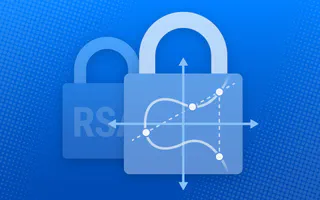
WWPass Announces Its Migration From RSA to Elliptic Curve Cryptography (ECC)
WWPass Team
∙
WWPass Announces Its Migration From RSA to Elliptic Curve Cryptography (ECC)
WWPass Team
∙
WWPass Announces Its Migration From RSA to Elliptic Curve Cryptography (ECC)
In June 2020, WWPass announced that it was moving from RSA to elliptic curve cryptography (ECC). The announcement gave the reasons: RSA demands high computational power and ever-longer keys, elliptic curves offer shorter keys and faster processing, and the new algorithm's one-way encryption is essential for WWPass operations.
Why ECC Instead of RSA
RSA algorithms, while well established and widely used, are notorious for high computational power demands and ever-increasing requirements for a key length. Elliptic curves are becoming more popular now, with shorter keys and faster processing. The new algorithm also features uncompromising one-way encryption, essential for WWPass operations.
NIST's key management guidance shows how quickly RSA key sizes grow compared with ECC for the same security strength:
Security strength | RSA key size | ECC key size |
|---|---|---|
112 bits | 2,048 bits | At least 224 bits |
128 bits | 3,072 bits | At least 256 bits |
192 bits | 7,680 bits | At least 384 bits |
256 bits | 15,360 bits | At least 512 bits |
The Switchover Plan (June 2020)
We are now at the final stages of software testing and plan to switch over in about two weeks. The transition in the production network will hardly take more than a few minutes. Users will be informed in advance of the precise date and time. To be fully safe, we advise backing up your data.
For how WWPass authentication works, see How WWPass Works.
FAQ
What is ECC?
Elliptic curve cryptography is a type of public-key cryptography built on the mathematics of elliptic curves. It provides security comparable to RSA with much shorter keys. For why open, published algorithms matter, see Is Open Source Security Really Safe?
Why did WWPass announce a move from RSA to ECC?
According to the announcement, RSA is known for high computational power demands and ever-increasing key length requirements, while elliptic curves offer shorter keys and faster processing. The announcement also said the new algorithm features one-way encryption that is essential for WWPass operations.
How much shorter are ECC keys than RSA keys?
For 128 bits of security strength, NIST's key management guidance lists RSA at 3,072 bits and ECC at 256 bits or more. At 256 bits of security strength, RSA needs 15,360 bits versus 512 bits or more for ECC.
What did users need to do for the switchover?
The June 2020 announcement said users would be told the exact date and time in advance, that the production transition would take no more than a few minutes, and that, to be fully safe, users should back up their data first.
In June 2020, WWPass announced that it was moving from RSA to elliptic curve cryptography (ECC). The announcement gave the reasons: RSA demands high computational power and ever-longer keys, elliptic curves offer shorter keys and faster processing, and the new algorithm's one-way encryption is essential for WWPass operations.
Why ECC Instead of RSA
RSA algorithms, while well established and widely used, are notorious for high computational power demands and ever-increasing requirements for a key length. Elliptic curves are becoming more popular now, with shorter keys and faster processing. The new algorithm also features uncompromising one-way encryption, essential for WWPass operations.
NIST's key management guidance shows how quickly RSA key sizes grow compared with ECC for the same security strength:
Security strength | RSA key size | ECC key size |
|---|---|---|
112 bits | 2,048 bits | At least 224 bits |
128 bits | 3,072 bits | At least 256 bits |
192 bits | 7,680 bits | At least 384 bits |
256 bits | 15,360 bits | At least 512 bits |
The Switchover Plan (June 2020)
We are now at the final stages of software testing and plan to switch over in about two weeks. The transition in the production network will hardly take more than a few minutes. Users will be informed in advance of the precise date and time. To be fully safe, we advise backing up your data.
For how WWPass authentication works, see How WWPass Works.
FAQ
What is ECC?
Elliptic curve cryptography is a type of public-key cryptography built on the mathematics of elliptic curves. It provides security comparable to RSA with much shorter keys. For why open, published algorithms matter, see Is Open Source Security Really Safe?
Why did WWPass announce a move from RSA to ECC?
According to the announcement, RSA is known for high computational power demands and ever-increasing key length requirements, while elliptic curves offer shorter keys and faster processing. The announcement also said the new algorithm features one-way encryption that is essential for WWPass operations.
How much shorter are ECC keys than RSA keys?
For 128 bits of security strength, NIST's key management guidance lists RSA at 3,072 bits and ECC at 256 bits or more. At 256 bits of security strength, RSA needs 15,360 bits versus 512 bits or more for ECC.
What did users need to do for the switchover?
The June 2020 announcement said users would be told the exact date and time in advance, that the production transition would take no more than a few minutes, and that, to be fully safe, users should back up their data first.
In June 2020, WWPass announced that it was moving from RSA to elliptic curve cryptography (ECC). The announcement gave the reasons: RSA demands high computational power and ever-longer keys, elliptic curves offer shorter keys and faster processing, and the new algorithm's one-way encryption is essential for WWPass operations.
Why ECC Instead of RSA
RSA algorithms, while well established and widely used, are notorious for high computational power demands and ever-increasing requirements for a key length. Elliptic curves are becoming more popular now, with shorter keys and faster processing. The new algorithm also features uncompromising one-way encryption, essential for WWPass operations.
NIST's key management guidance shows how quickly RSA key sizes grow compared with ECC for the same security strength:
Security strength | RSA key size | ECC key size |
|---|---|---|
112 bits | 2,048 bits | At least 224 bits |
128 bits | 3,072 bits | At least 256 bits |
192 bits | 7,680 bits | At least 384 bits |
256 bits | 15,360 bits | At least 512 bits |
The Switchover Plan (June 2020)
We are now at the final stages of software testing and plan to switch over in about two weeks. The transition in the production network will hardly take more than a few minutes. Users will be informed in advance of the precise date and time. To be fully safe, we advise backing up your data.
For how WWPass authentication works, see How WWPass Works.
FAQ
What is ECC?
Elliptic curve cryptography is a type of public-key cryptography built on the mathematics of elliptic curves. It provides security comparable to RSA with much shorter keys. For why open, published algorithms matter, see Is Open Source Security Really Safe?
Why did WWPass announce a move from RSA to ECC?
According to the announcement, RSA is known for high computational power demands and ever-increasing key length requirements, while elliptic curves offer shorter keys and faster processing. The announcement also said the new algorithm features one-way encryption that is essential for WWPass operations.
How much shorter are ECC keys than RSA keys?
For 128 bits of security strength, NIST's key management guidance lists RSA at 3,072 bits and ECC at 256 bits or more. At 256 bits of security strength, RSA needs 15,360 bits versus 512 bits or more for ECC.
What did users need to do for the switchover?
The June 2020 announcement said users would be told the exact date and time in advance, that the production transition would take no more than a few minutes, and that, to be fully safe, users should back up their data first.

Get WWPass
Download the WWPass Key app and test authentication without a username or password.
Get WWPass
Download the WWPass Key app and test authentication without a username or password.
